Gold's Unusual Sell-Off Amid Geopolitical Tensions
Market Facts & Performance: Gold's Unprecedented Decline
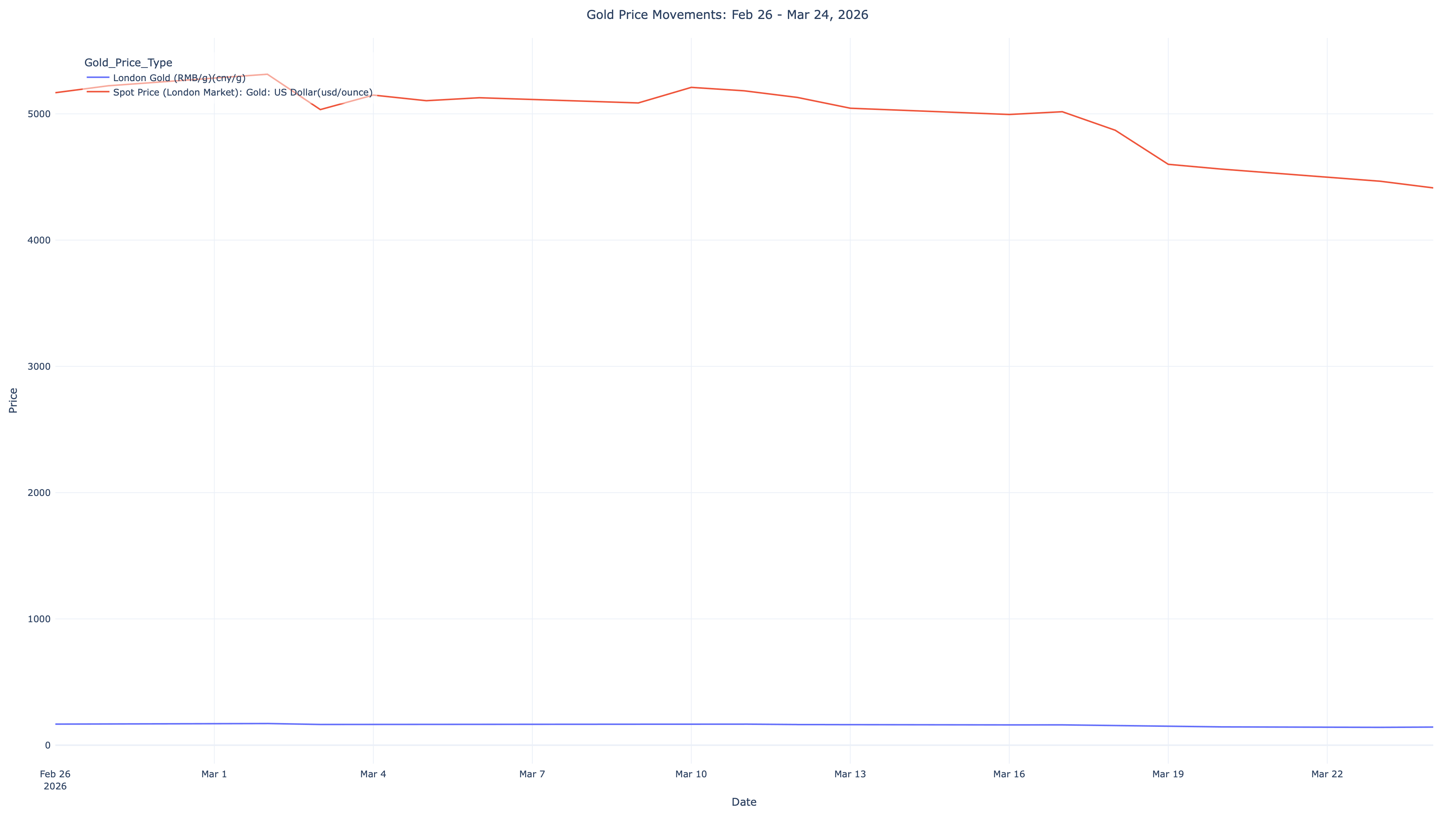
In an unexpected turn of events, gold prices extended their sell-off on March 23-24, 2026, pushing the precious metal deeper into bear-market territory. Gold futures (SHFE) closed at ¥977.28 on March 24, representing a stark 14.76% decline over the past month. Specifically during the March 23-24 window, gold fell another 1.57%, marking a record-breaking 10th consecutive daily loss. Similarly, the London gold spot price retreated to 5,200/oz.
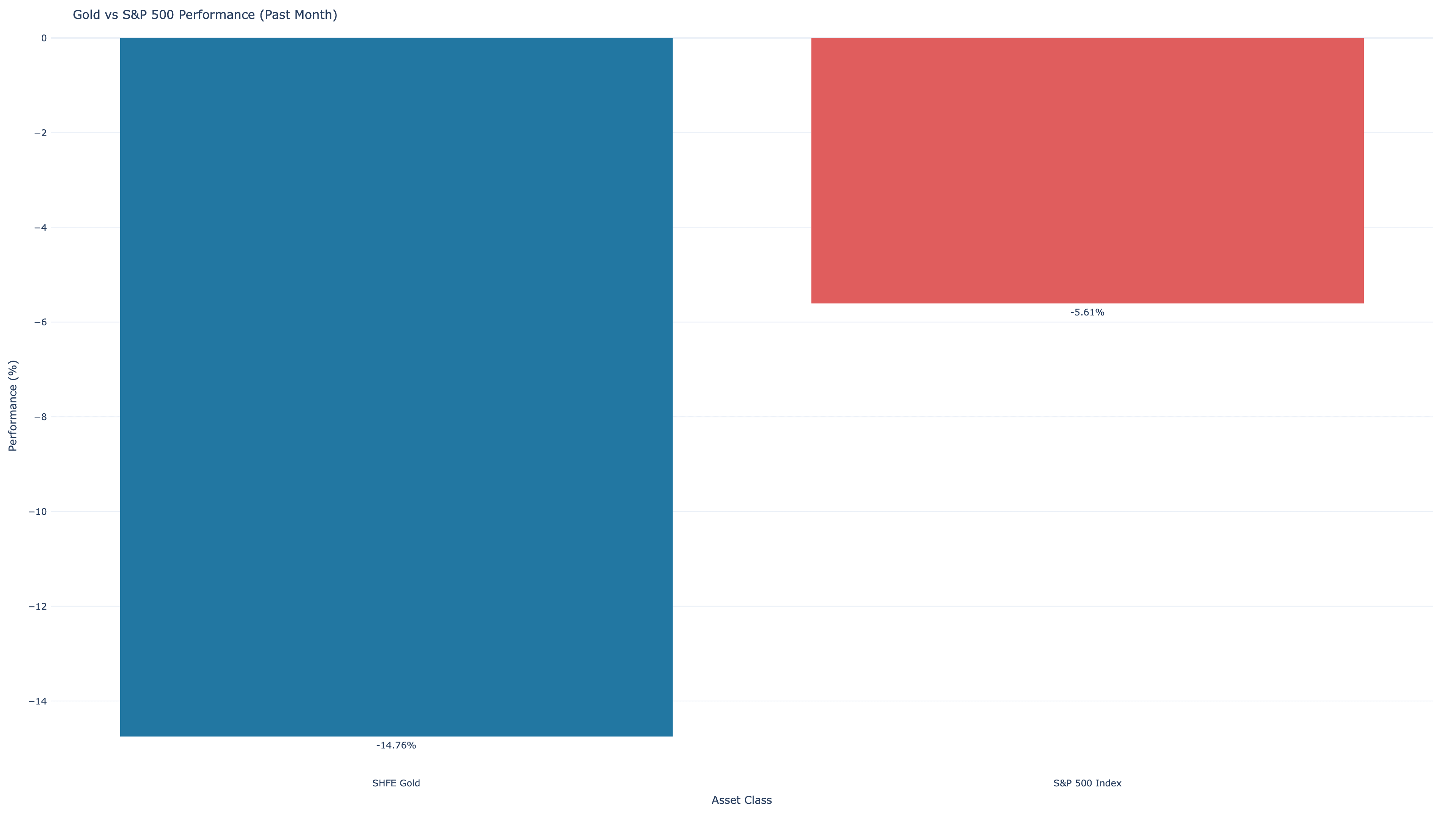
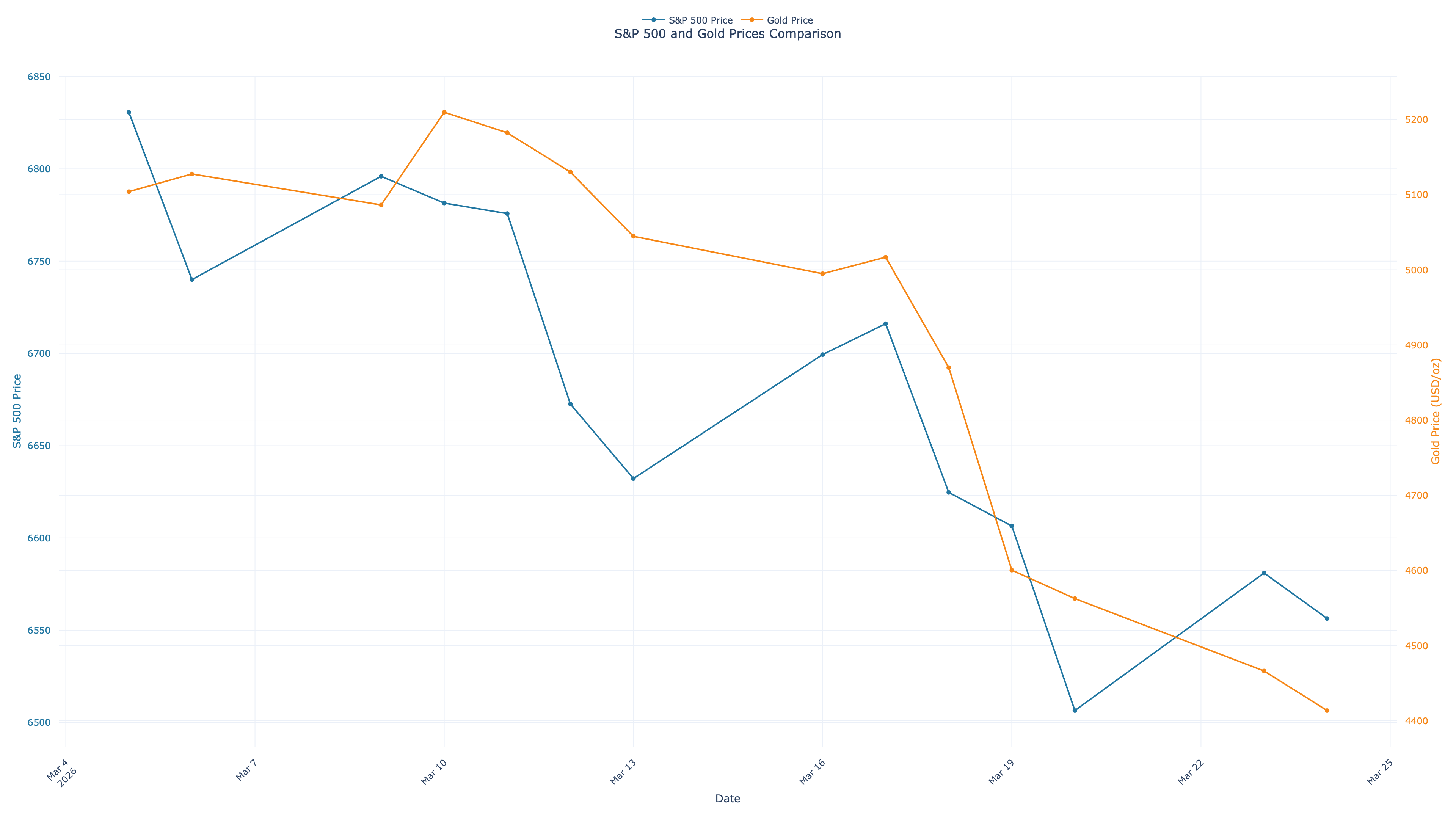
Conversely, the S&P 500 demonstrated notable relative resilience, declining only 5.61% over the same period. This created a significant 9.15 percentage point performance gap in favor of equities.
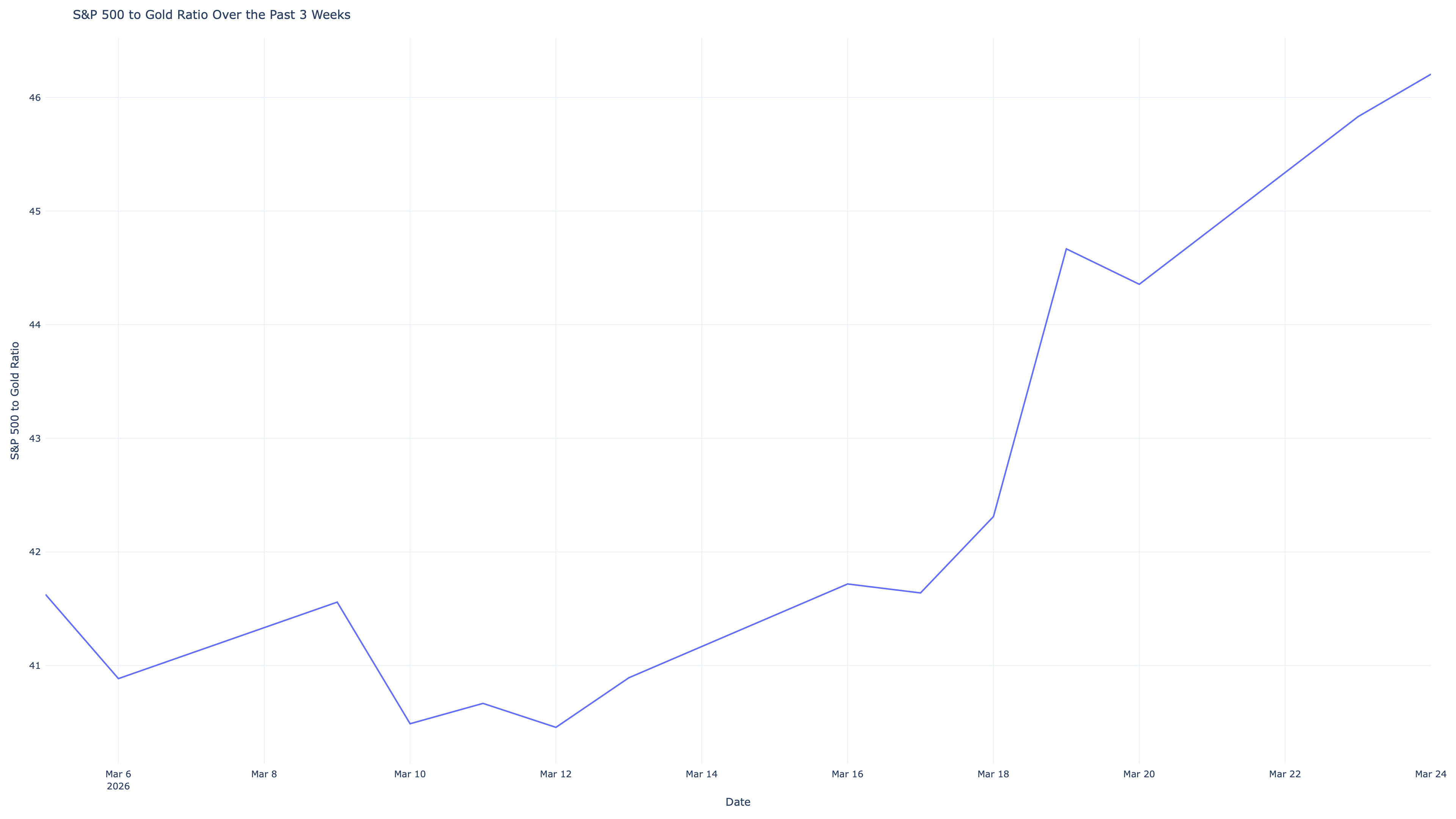
Reflecting this dynamic, Morgan Stanley noted that the S&P 500-to-gold ratio increased by approximately 12% over the span of three weeks, signaling that investors are favoring equities over traditional safe havens despite elevated geopolitical risks.
Interpretation: Breaking the Traditional Haven Narrative
This market behavior represents a massive departure from traditional safe-haven dynamics. Typically, escalating Middle East tensions would drive capital toward gold as investors seek protection from geopolitical uncertainty. However, current market dynamics reveal three powerful countervailing forces:
- Inflation and Interest Rate Concerns: Investors are increasingly focused on how Middle East conflicts could exacerbate inflation through higher oil prices, potentially forcing central banks to maintain or raise interest rates. Because gold yields no interest, higher rates drastically reduce its attractiveness as an asset.
- Oil Market Dominance: The conflict's primary market impact has been concentrated on oil prices (trading above $100/barrel). While stagflationary pressures historically benefit gold, they currently appear overshadowed by broader growth concerns and the direct impact of energy costs.
- Geopolitical De-escalation Expectations: President Trump's statements regarding potential Iran talks and the U.S. pullback from strikes have shifted market expectations, reducing the immediate panic-driven demand for safe havens.
Actionable Insights for Investors
The rising S&P 500-to-gold ratio offers a brighter signal for stock investors. Morgan Stanley’s Mike Wilson highlighted that there is currently no evidence suggesting the Iran conflict requires downward revisions to earnings-per-share (EPS) expectations for U.S. companies. Investors should watch the following signals carefully:
- Evaluate Equity Market Resilience: The S&P 500's relative strength suggests the market is looking past near-term geopolitical noise and focusing on underlying corporate earnings. Watch Q1 2026 earnings reports to confirm if U.S. companies can sustain profitability amid these disruptions.
- Monitor Oil-Gold Correlation: If oil prices stabilize while gold continues to weaken, it confirms the market's focus on growth and inflation dynamics over pure geopolitical risk.
- Track Interest Rate Expectations: Keep an eye on Federal Reserve communications. If inflation expectations moderate and rate cut expectations resurface, gold could eventually find support as a hedge against monetary easing.
- Assess Geopolitical Developments: Monitor diplomatic efforts between the U.S. and Iran; successful de-escalation will keep pressure on gold.
Risks to the Current Thesis
The market's current dismissal of gold’s haven role could prove premature if conditions change. Risks include:
- Geopolitical tensions escalating beyond current expectations, particularly if critical energy infrastructure is actively targeted.
- Inflation proving more sticky and persistent than anticipated, forcing prolonged high interest rates that eventually erode equity valuations.
- The conflict triggering broader economic disruptions that undermine corporate earnings more severely than currently priced in.
- Central banks responding to market stress with coordinated interventions, including large-scale gold purchases.